
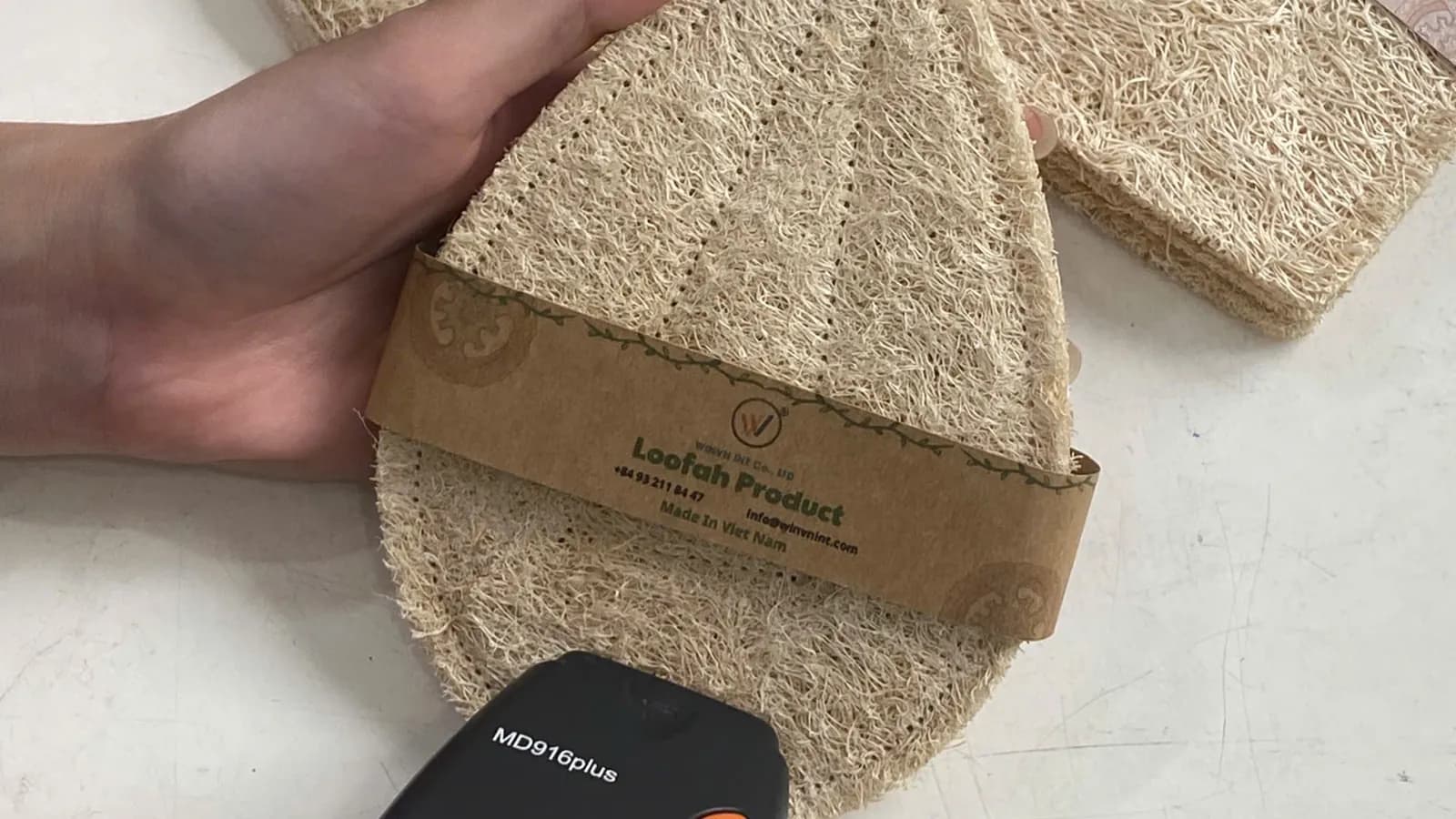
Loofah Moisture Content, Shelf Life and Mold Prevention
Moisture content is one of the largest drivers of loofah quality complaints after delivery. A product that looks acceptable at packing can develop odor or mold in transit if it was not fully dried, especially inside sealed cartons or on humid shipping routes.
Why residual moisture is risky
Loofah is a natural cellulose fiber and will support mold growth if packed while still damp or stored in a humid environment. Risk increases with sealed packaging, long transit times and warm, humid destination climates.
Drying practices to ask about
Ask suppliers to describe their drying method and duration, whether drying is weather-dependent or controlled, and whether finished product is re-checked for dryness immediately before packing, not only after the initial dry stage.
Packaging choices that support shelf life
Breathable or ventilated packaging reduces trapped humidity compared with fully sealed plastic, particularly for bulk or long-transit shipments. Silica or moisture-indicator inserts can be a useful low-cost verification tool inside cartons.
What to check on arrival
Inspect a sample from multiple cartons, not just the top layer, for odor, discoloration or soft spots. Document findings with photos and timestamps promptly, since mold risk assessment is time-sensitive evidence for any supplier discussion.
See also our pre-shipment QC protocol and how to care for a loofah dish sponge. Ask about moisture-controlled packing options.