
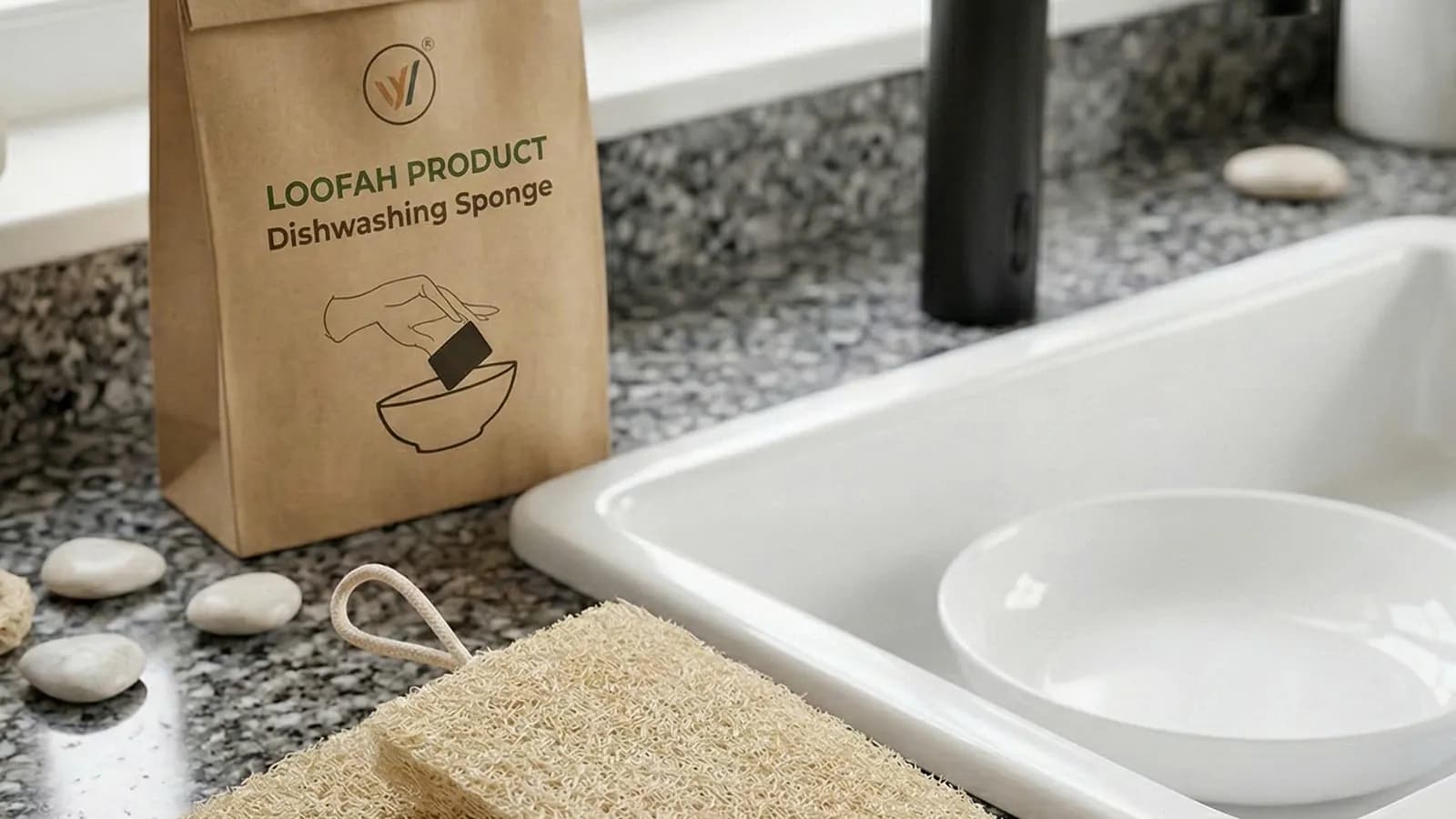
How to Care for a Loofah Dish Sponge
Like any kitchen sponge, natural loofah lasts longer and stays more hygienic with a few consistent care habits. Because it is a natural fiber, drying between uses matters more than with some synthetic materials.
Rinse thoroughly after each use
Rinse out food residue and soap completely after washing dishes. Leftover residue trapped in the fiber can contribute to odor and provides a food source for bacteria if the sponge stays damp.
Dry fully between uses
Store the sponge somewhere it can air dry completely, such as a hanging hook or an open dish rack, rather than in a closed, damp sink caddy. Full drying between uses is the single most effective habit for extending usable life.
Occasional deep cleaning
Periodically soaking in warm water with a small amount of mild soap or a natural disinfecting rinse can help refresh the sponge, though buyers should follow their own product's specific care instructions rather than assuming one method suits all formats.
Knowing when to replace
Replace the sponge when it develops persistent odor after cleaning, visible mold, significant fiber breakdown or a sour smell that doesn't improve after drying. Natural sponges generally need replacement more frequently than durable synthetic alternatives.
See also using loofah as a natural dish sponge and moisture content and mold prevention. Ask about bulk dish sponge orders.