
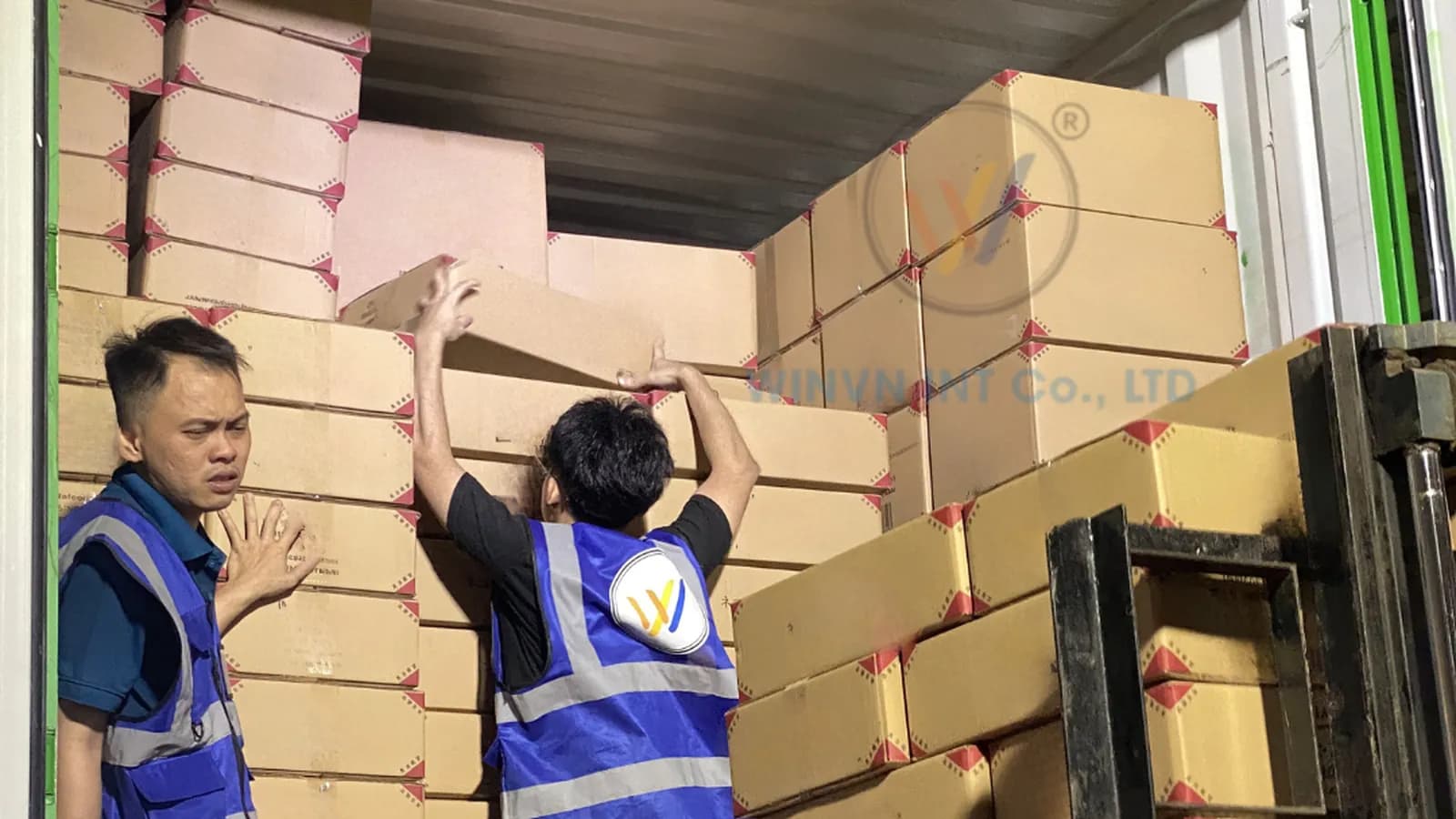
Container Loading Checklist for Loofah Exporters
A short pre-loading checklist can prevent avoidable problems before a loofah shipment leaves the factory. Because loofah is lightweight and moisture-sensitive, loading practices deserve as much attention as the product specification itself.
Carton condition and sealing
Check that cartons are dry, undamaged and properly sealed before loading. Any cartons stored outdoors or near open areas should be inspected more closely for moisture exposure prior to container stuffing.
Stacking and weight distribution
Loofah cartons are generally light, so stacking height and container weight distribution should follow the container's practical limits rather than weight limits alone, to avoid crushing lower cartons.
Ventilation and moisture protection
Confirm whether desiccant or moisture-absorbing material is being used inside the container, particularly for long transit routes or shipments during humid seasons, and whether container flooring is dry before loading begins.
Documentation and photo evidence
Request loading photos showing carton condition, stacking pattern and final container seal number. This record is useful if a claim needs to be filed after arrival and confirms what actually left the factory.
Related: how a loofah container is loaded and FCL vs LCL for loofah shipments. Ask for your shipment's loading photos.