
Why Vine-Dried Loofah (7–9 Months) Lasts Longer — And Why That Matters for Your Return Rate
- Quality
- Durability
- Cure Time
If you've ever wondered why two loofahs that look nearly identical in a product photo perform completely differently in a customer's shower — one lasting months, the other falling apart or molding within weeks — the answer usually isn't visible in the photo at all. It's in how long the loofah was left to dry before it was ever harvested.
Want to feel the difference yourself? Request a Sample Kit and test durability before you order in bulk.
What "cure time" actually means
Cure time is the length of time a loofah gourd is left to dry on the vine before harvest. As the gourd dries, the fiber inside becomes denser and more structurally sound. Rush that process and you get a gourd that's technically dry enough to harvest, but with fiber that hasn't fully developed — thinner, less springy, and more likely to hold onto moisture after use.
Most lower-cost loofah in the market is cured for roughly 2–3 months — fast enough to keep up with high-volume, low-price production, but short of what the fiber needs to reach its full density.
Why a short cure time becomes a return-rate problem
The consequences of under-cured loofah don't show up at the point of sale — they show up weeks into ownership, which is exactly when a customer is deciding whether to leave a review:
- Thinner fiber mats down faster, making the product feel "used up" much sooner than a customer expects.
- Under-cured fiber holds more residual moisture, which creates the damp conditions mold needs to take hold — one of the most common causes of negative reviews on loofah listings.
- Inconsistent density between individual units makes quality feel unpredictable, even when a customer's first unit was fine.
None of this is a listing problem or a photography problem — it's a raw material problem, and it traces directly back to how long the loofah was cured before it ever reached a factory floor.
Why LoofahVN cures for 7–9 months
We leave our loofah on the vine for 7–9 months before harvest — roughly three times the industry-common fast-cure timeline. That extended cure time is what gives our fiber its density and its resistance to mold and matting, and it's a big part of why sellers switch to us specifically to bring down return rates on an existing listing. For a deeper look at how moisture and mold actually develop in a loofah product, see our related guide on why loofahs get moldy — the real cause and the fix.
How to actually check cure time — not just take a supplier's word for it
Cure time isn't something you can verify from a spec sheet alone. The most reliable way to check it is hands-on:
- Request a sample and check fiber density and rigidity by hand.
- Ask the supplier directly how cure time is measured and verified in their own process — a supplier who cures properly will have a clear, specific answer.
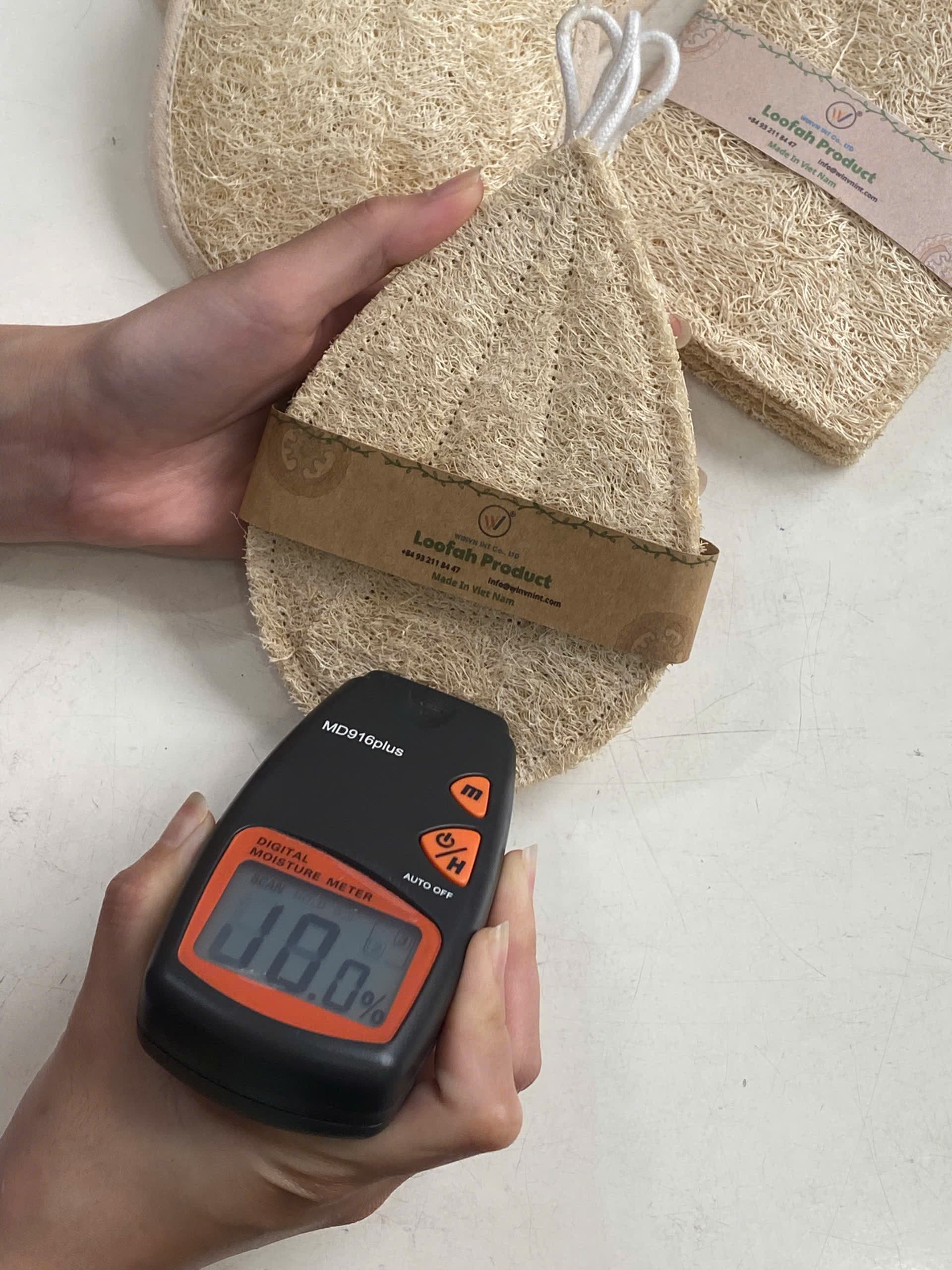
- Compare moisture content between samples from different suppliers if you're evaluating more than one.
A supplier confident in their cure time will welcome this kind of scrutiny rather than deflect it.
Test it before you scale it
Request a Sample Kit to test durability yourself — feel the fiber density directly and compare it to what you're currently sourcing. When you're ready to move forward, get a quote for your next order.