
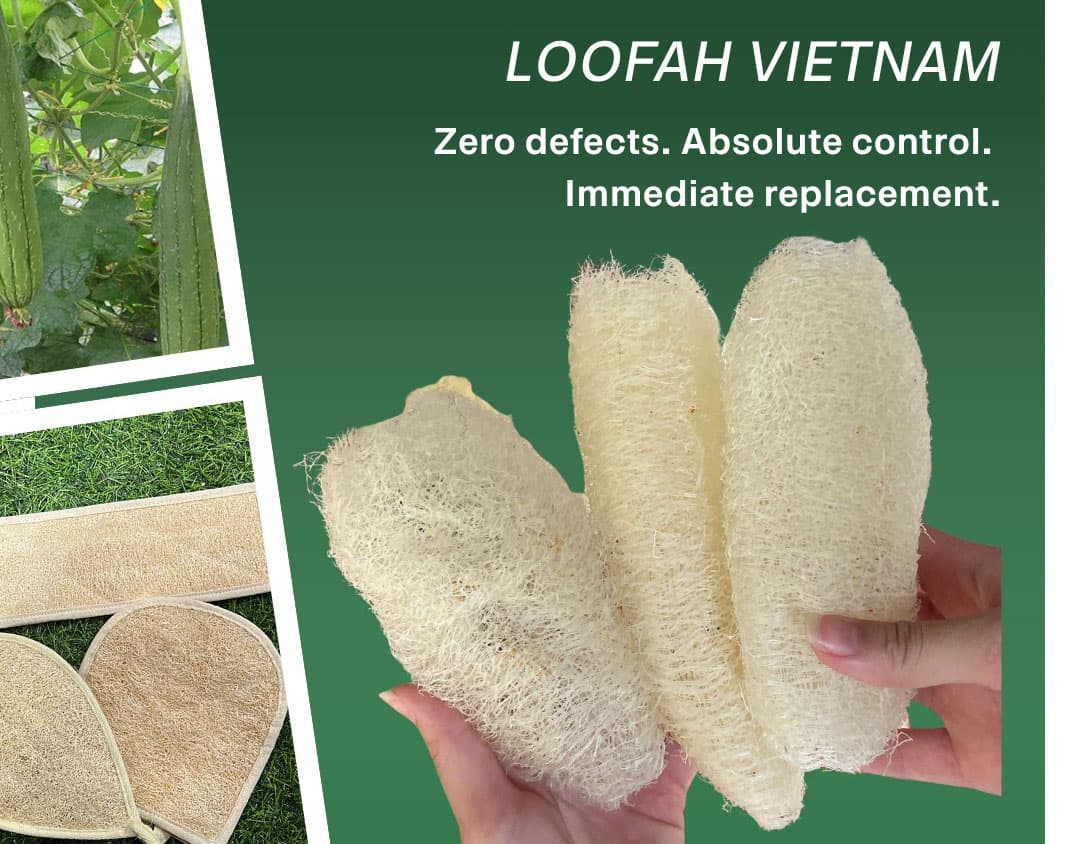
Why Do Loofahs Get Moldy? The Real Cause and the Fix
Many people think a loofah gets moldy because the product is “bad.”
But the real reason is usually more specific.
A natural loofah can grow mold when moisture stays trapped inside the fibre for too long.
This can happen after daily use, poor drying, humid bathroom conditions, weak raw material drying, or poor supplier-side moisture control before packaging.
Loofah is a plant-based fibre.
That is exactly why consumers like it.
It is natural, biodegradable, breathable, and a better alternative to plastic bath sponges or synthetic kitchen scrubbers.
But because it is natural, moisture management matters.
A good loofah is not only about shape, softness, or price.
A good loofah starts with drying, cleaning, checking, and proper storage.
In this article, we will explain why loofahs get moldy, how to prevent it, and what buyers should look for when choosing a better natural loofah product.
Why do loofahs get moldy?
Loofahs get moldy when three conditions happen together:
Moisture remains inside the fibre.
Airflow is poor.
Organic residue stays on the surface.
Natural loofah has a 3D fibre structure.
This structure is useful because it helps create foam, scrub gently, and dry faster than many dense synthetic sponges.
But if the loofah stays wet in a closed bathroom, inside a plastic bag, or on a flat wet surface, the same fibre network can hold moisture longer than expected.
That moisture becomes the main trigger for mold.
This does not mean natural loofah is unsafe.
It means natural loofah must be dried, stored, and processed correctly.
The real cause is moisture, not the loofah itself
The biggest misunderstanding is this:
People blame the material.
But in most cases, the problem is moisture control.
A loofah can pick up water during use.
That is normal.
The issue starts when the loofah cannot release that water.
For example:
It is left in a wet shower corner.
It is stored in a closed container.
It is packed before fully dry.
It is shipped in humid conditions.
It is made from raw material that was not dried properly.
It is exposed to poor airflow after use.
For consumers, the solution is better daily care.
For retailers and Amazon sellers, the solution starts earlier: choosing a supplier that controls dryness, mold risk, colour, smell, and fibre strength before the product is packed.
Why natural fibres need better drying control
Natural fibres are different from plastic.
A synthetic sponge may not decompose quickly, but it can still trap water, soap, and bacteria.
A natural loofah is plant-based, so it must be treated with more discipline during production.
The drying stage is critical.
If the raw loofah is not fully dry before cutting, sewing, packing, or shipping, the risk of mold increases.
This is especially important for export orders.
Products may spend weeks in cartons, warehouses, containers, or humid environments before reaching the buyer.
For this reason, professional loofah production should include:
Raw material dryness inspection.
Mold and pest inspection.
Colour and smell checking.
Fibre strength checking.
Drying after washing.
Final inspection before packaging.
A natural product can only stay reliable when the process behind it is controlled.
How to prevent your loofah from getting moldy at home
For daily users, mold prevention is simple but must be consistent.
1. Rinse it well after every use
After using a loofah, rinse out soap, body wash, dead skin, or food residue.
Residue can stay inside the fibre.
When residue combines with moisture, it creates better conditions for mold.
Use clean running water and squeeze the loofah gently.
Do not twist too aggressively, especially with sewn loofah pads or gloves.
2. Squeeze out excess water
A wet loofah should never be left dripping.
After rinsing, press out the excess water.
This helps the inner fibre dry faster.
For bath loofahs, squeeze gently from different angles.
For kitchen loofahs, press the sponge flat and let the water drain out.
3. Hang it in a ventilated place
This is one of the most important steps.
Do not leave your loofah lying flat on a wet sink or bathroom shelf.
Hang it.
A hanging loop is not just a small design detail.
It helps airflow pass through the fibre and reduces trapped moisture.
The better the airflow, the lower the mold risk.
4. Keep it outside the wettest shower zone
Many people hang their loofah inside the shower.
That is convenient, but it is not always ideal.
If the shower area stays wet for hours, move the loofah to a drier wall hook, window area, or ventilated rack.
A loofah needs time to breathe.
5. Let sunlight help when possible
Occasional sunlight exposure can help reduce moisture.
You do not need to sun-dry the loofah every day.
But if your bathroom is very humid, drying it near natural light or fresh air can help.
Avoid leaving coloured fabric parts under harsh sunlight for too long, as this may affect appearance.
6. Replace it when it changes smell, colour, or texture
A loofah should look and smell clean.
Replace it if you notice:
A musty smell.
Dark spots that do not rinse away.
Slimy texture.
Weak or broken fibre.
Loss of shape.
Unusual colour change.
Natural products have a lifecycle.
Using them beyond that lifecycle is not recommended.
What retailers should know about mold risk
For retailers, mold is not only a product issue.
It is a trust issue.
A customer may forgive a product being slightly smaller than expected.
But mold creates a stronger emotional reaction.
It makes customers question safety, hygiene, and brand quality.
For Amazon sellers, the risk is even bigger.
Mold-related complaints can lead to:
Negative reviews.
Refund requests.
Product returns.
Lower ranking.
Poor repeat purchase.
Loss of buyer trust.
That is why mold prevention should not be treated as an after-sales issue.
It should be designed into the product from the beginning.
What to look for in a better loofah supplier
A reliable loofah supplier should not only say “natural” or “eco-friendly.”
Those words are not enough.
For buyers, the better questions are:
How is the raw loofah dried?
Is the material checked for mold before production?
Is the colour natural and consistent?
Is there any strange smell?
Is the fibre strong or does it break easily?
Is the product dried again after washing?
Is the packaging breathable or low-risk for moisture?
Is the supplier able to explain its QC process clearly?
These questions matter because loofah is a natural material.
A supplier that understands moisture control is usually safer than a supplier that only competes on price.
Why vine-dried and mold-checked fibre matters
A better loofah starts at the farm.
Mature loofah has a stronger fibre network.
When the fruit is properly matured and dried, the final sponge tends to have better structure, better durability, and better drying behaviour.
But maturity alone is not enough.
The fibre must also be checked.
Professional inspection should remove loofah with:
White or black mold marks.
Musty smell.
Excess moisture.
Weak fibre.
Uneven or damaged structure.
Poor colour.
This is why “mold-checked fibre” is an important product promise.
It shows that the supplier is not only selling a plant-based sponge.
They are managing the natural risks behind the product.
Is mold always visible?
Not always at the beginning.
Sometimes, the first sign is smell.
A loofah may still look acceptable but smell damp or musty.
That is why smell inspection matters during production and after use.
For consumers, trust your senses.
If the loofah smells wrong, replace it.
For buyers, supplier-side smell and moisture checks should be part of the quality process.
A natural product must pass visual inspection and sensory inspection.
Should you store loofahs in plastic packaging?
For short-term retail display, some packaging may protect the product from dust and handling.
But for natural fibres, packaging design should consider moisture risk.
If a loofah is packed before it is fully dry, sealed plastic can make the problem worse.
For eco retailers, kraft paper, paper bands, kraft boxes, or breathable retail-ready packaging often match the product story better.
They also help customers understand that the product is natural, low-plastic, and aligned with a sustainable lifestyle.
The packaging should not fight against the product promise.
A natural loofah should feel natural from product to shelf.
How often should you replace a loofah?
There is no single answer for every user.
It depends on:
How often you use it.
How well you rinse it.
How quickly it dries.
How humid your bathroom is.
Whether it is used for bath, kitchen, or body care.
As a simple rule:
Replace it when it smells musty.
Replace it when dark spots appear.
Replace it when the fibre becomes weak.
Replace it when it no longer dries properly.
Replace it when the product no longer feels clean.
For retailers, it is helpful to include simple care instructions on packaging or insert cards.
Good usage guidance reduces complaints and improves customer experience.
The fix: better drying, better care, better sourcing
The solution to loofah mold is not complicated.
But it requires discipline.
Consumers should rinse, squeeze, hang, and dry the product properly.
Retailers should educate customers with clear care instructions.
Amazon sellers should avoid treating loofah as a generic sponge.
Importers should ask suppliers about moisture control, drying, mold inspection, and packaging.
Suppliers should build mold prevention into the process, not use it as a response after complaints happen.
A natural loofah can be a strong, practical, plastic-free product.
But only when the fibre is selected, dried, checked, packed, and used correctly.
Final thought
Loofahs do not get moldy simply because they are natural.
They get moldy when moisture is not controlled.
That is the real cause.
And the fix is clear:
Start with properly dried fibre.
Check for mold before production.
Keep the product clean and ventilated after use.
Choose packaging that supports the product’s natural story.
Work with suppliers who understand moisture, not only price.
For eco shops, Amazon sellers, and natural product buyers, this is where quality begins.
Not at the final package.
But at the fibre.
Want to see how vine-dried, mold-checked loofah fibre is prepared for export? Explore our quality process and natural loofah product range.