
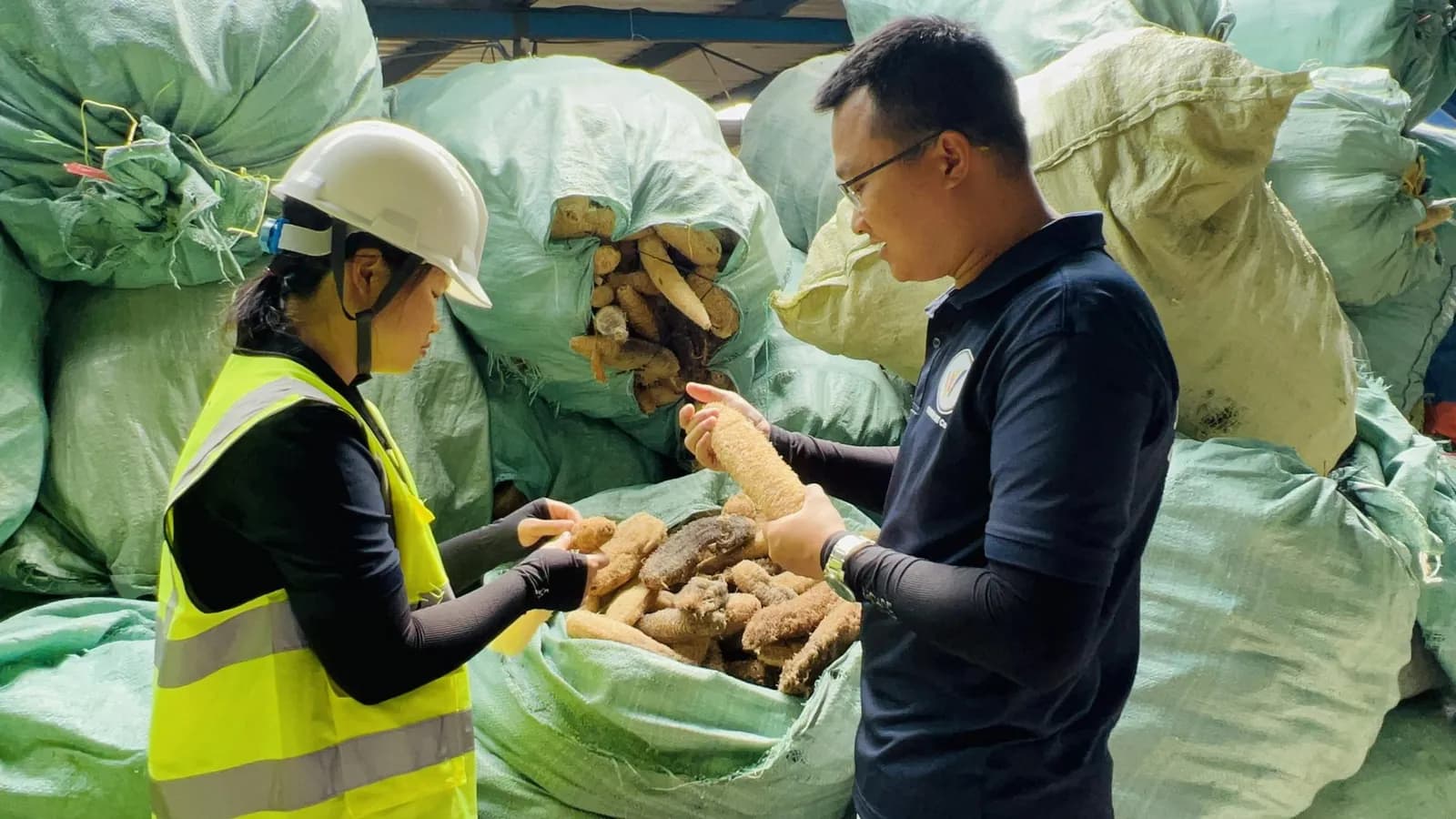
How Loofah Fiber Is Graded and Sorted Before Production
Grading is the step that turns variable natural material into a consistent loofah product line. Before cutting or stitching begins, workers sort raw fiber against criteria that determine which product format each piece is suited for.
Diameter and length grading
Fiber sections are grouped by diameter and usable length, since these determine whether a piece becomes a compact dish sponge, a full-length back scrubber, or trimmed pads for bath mitts and facial products.
Density and firmness grading
Density affects how firm or gentle the finished product feels against skin or dishware. Graders separate denser, coarser sections from softer, looser sections so a buyer's firmness specification can be matched consistently across a production run.
Color and surface condition
Natural fiber ranges from pale cream to tan. Pieces with dark staining, mold marks, insect damage or structural breaks are removed at this stage rather than left for a final inspector to catch, which reduces downstream rework.
Why grading affects your quotation
A supplier quoting a narrow grade range or premium density typically has a lower yield from raw material, which is reflected in price. Ask suppliers to state the grade or density range behind a quotation, not only the finished dimensions.
Continue with loofah fiber density and grading explained or how to test fiber quality before buying, and request graded samples.