
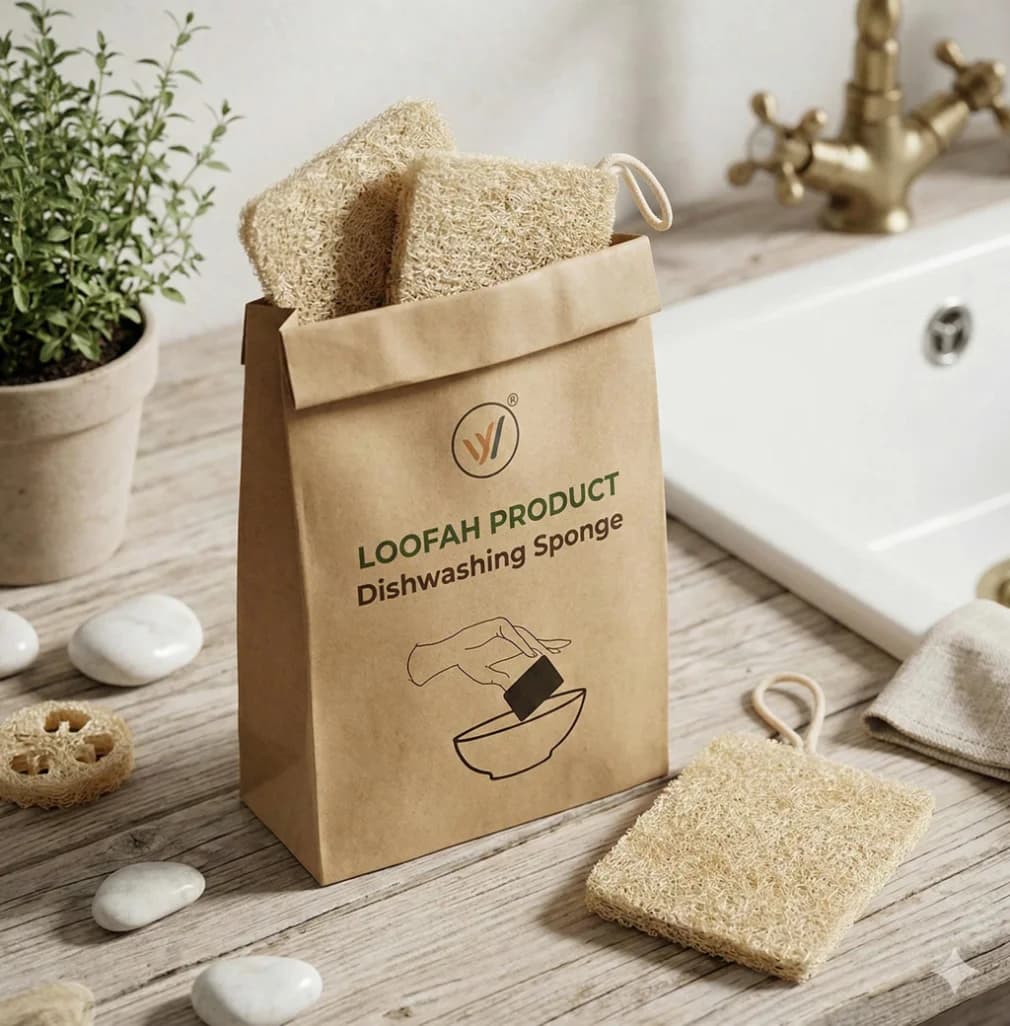
What Is a Loofah, Really? From Vine to Bathroom
- 6a2b0f638cacf0830176392b
Quick answer: a loofah is the dried fibrous skeleton of the Luffa aegyptiaca gourd — a fast-growing vine in the cucumber family. No ocean involved, no factory-made foam. Just a fruit, sunshine, and a little patience.
The most common misconception
Ask ten people where loofah comes from and at least seven will say "the sea." It is an honest mistake — the texture looks like coral and the name sounds vaguely nautical. But sea sponges are animals. Loofah is a plant, and a remarkably generous one: a single healthy vine can produce dozens of gourds in one season.
From flower to fiber
- Flowering. Bright yellow blossoms appear on the vine in early summer, pollinated mostly by bees.
- Growing. The young gourd looks like a giant zucchini. Picked young, it is actually edible — a common ingredient in Vietnamese soups.
- Maturing. Left on the vine, the flesh slowly retreats and a dense network of cellulose fiber forms inside.
- Drying. The gourd turns brown and light. Farmers crack the skin, shake out the seeds, and reveal the fiber skeleton.
- Finishing. The fiber is washed, sun-dried, and cut into sponges, pads, slices and gloves.
A loofah is not manufactured. It is revealed — everything about its structure was grown, not molded.
Why the fiber works so well
The cellulose network is firm when dry and pleasantly soft when wet. It holds lather generously, scrubs without scratching, and dries fast enough to resist odor. When it finally wears out — typically after a month or two of daily use — it can go straight into the compost bin.
One plant, many products
- Bath sponges and exfoliating pads for skincare routines
- Kitchen scrubbers that are safe on non-stick cookware
- Soap rests and dish pads that drain and dry naturally
- Even insoles and craft material in some traditions
Next time someone tells you loofah comes from the ocean, you can smile and tell them the truth: it comes from a vine — most likely one growing in a sunny field in Vietnam.