
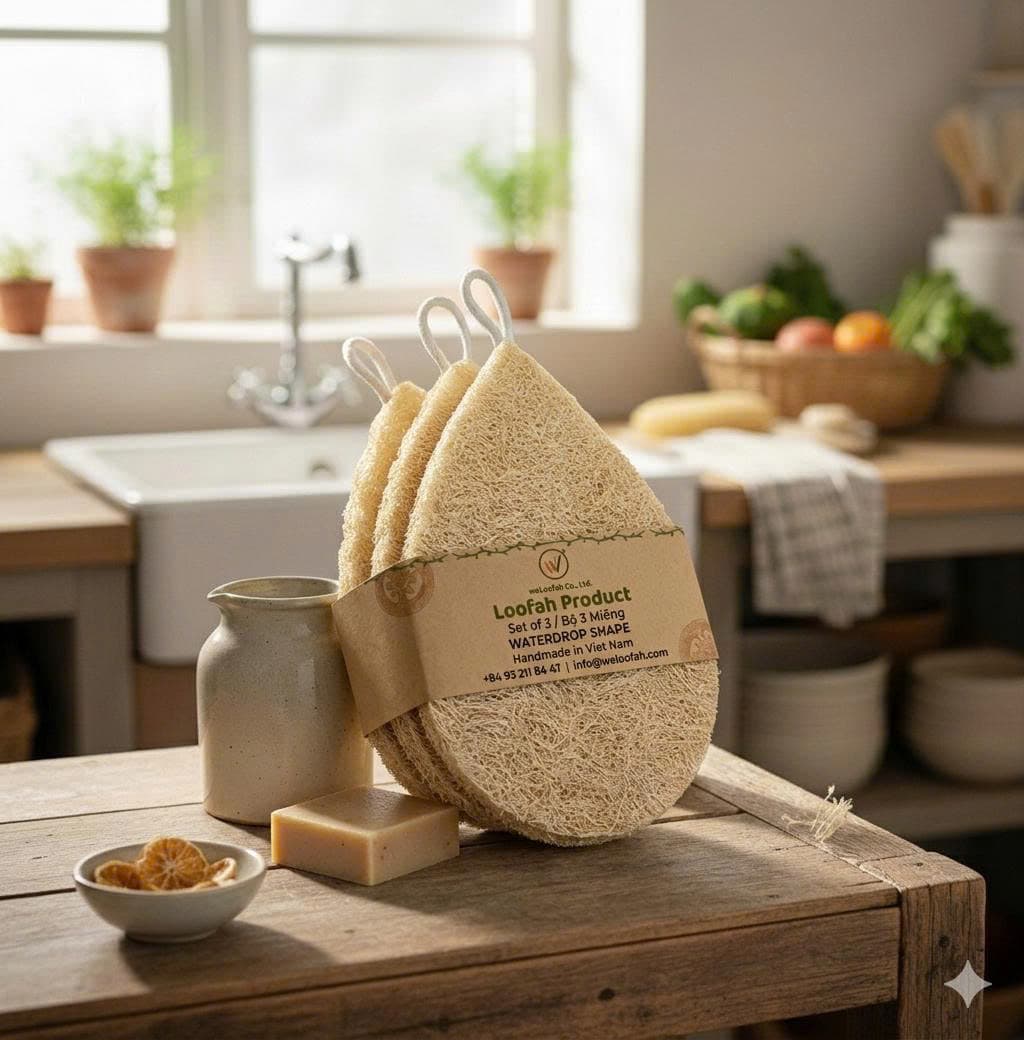
How to Source Private-Label Loofah for Amazon FBA: 2026 Checklist
Sourcing a private-label loofah for Amazon FBA is not just about finding a low-cost supplier.
That is where many sellers make the first mistake.
A loofah may look like a simple product.
But for Amazon FBA, it becomes a full system:
Product quality.
Bundle strategy.
Retail packaging.
Barcode and label setup.
Carton and master case preparation.
Moisture control.
Listing images.
Brand story.
FBA size and logistics planning.
If one part is wrong, the product may still arrive at Amazon.
But it may not sell profitably.
Worse, it may create returns, bad reviews, storage issues, or compliance problems.
This checklist is designed for Amazon sellers who want to launch a private-label natural loofah product line in 2026 with lower risk and better preparation.
Why private-label loofah is attractive for Amazon sellers
Natural loofah sits at the intersection of several strong consumer trends.
It is plant-based.
It is plastic-free.
It is lightweight.
It fits kitchen, bath, body care, spa, and zero-waste categories.
It can be sold in bundles.
It is a repeat-purchase product.
For Amazon sellers, that combination is important.
A single low-value product is often difficult to scale profitably.
But a well-designed loofah bundle can create better perceived value, higher average order value, and stronger brand positioning.
That is why private-label loofah should not be treated as a generic sponge.
It should be treated as a small eco product line.
The goal is not only to source a loofah.
The goal is to launch a sellable, FBA-ready, retail-ready product.
Step 1: Choose the right loofah segment
Before asking for price, decide which segment you want to enter.
There are two main directions.
Kitchen loofah
Kitchen loofah is usually sold as a dish sponge, vegetable scrubber, or plastic-free kitchen sponge.
It is practical, consumable, and easy to understand.
Common selling points include:
Plastic-free alternative to synthetic sponges.
Non-scratch cleaning.
Quick-drying structure.
Plant-based fibre.
Repeat purchase potential.
Kitchen loofah usually works well in multipacks such as 3-pack, 4-pack, 6-pack, or 10-pack.
This segment can be more price-sensitive, but it can also create good repeat demand.
Bath loofah
Bath loofah is positioned more around body care, exfoliation, self-care, and spa experience.
Common product types include:
Loofah bath glove.
Oval exfoliating scrubber.
Body scrubber pad.
Back scrubber belt.
Droplet bath sponge.
Bath loofah can support a more premium positioning if the design, packaging, texture, and brand story are strong.
This segment is not only about cleaning.
It is about experience.
Step 2: Build your SKU strategy before asking for MOQ
Many sellers ask suppliers:
“What is your MOQ?”
That is not the best first question.
A better question is:
“What SKU structure gives me the best chance to test, launch, and scale?”
For Amazon FBA, SKU planning should include:
Product type.
Bundle count.
Retail price target.
Packaging type.
FBA size target.
Private-label requirement.
Photography and content needs.
A 3-pack kitchen sponge has a different business model from a 1-pack premium bath scrubber.
A 6-pack kitchen bundle may compete on value.
A 2-pack bath scrubber may compete on self-care and gifting.
A private-label loofah line should be built around a clear launch strategy, not random product selection.
Step 3: Check whether the product can be compressed
Loofah is lightweight but bulky.
That is one of the biggest problems for Amazon sellers.
A product can have a low factory price but still become expensive after shipping, storage, and FBA handling.
This is why compression matters.
Pressed or compressed loofah can help reduce volume, improve carton efficiency, and make storage easier.
But compression must be done carefully.
A good supplier should understand:
How thin the product can be pressed.
Whether the product can recover shape after water contact.
Whether compression affects fibre strength.
Whether packaging can hold the compressed shape.
Whether the final size fits the seller’s FBA economics.
Do not only ask:
“Can you compress it?”
Ask:
“Can you compress it without damaging the fibre, the shape, and the customer experience?”
For private-label loofah Amazon FBA sourcing, compression should be part of the profit model, not just a production technique.
Step 4: Select packaging based on the channel
Packaging is not decoration.
For Amazon, packaging affects perceived value, shipping protection, barcode placement, customer experience, and sometimes size efficiency.
For eco products, packaging also sends a message.
A plastic-free loofah packed in too much plastic creates a contradiction.
Common packaging options include:
Kraft belly band.
Kraft soft bag.
Kraft stand-up pouch.
Kraft box with window.
Cotton drawstring pouch.
Gift-ready box.
For kitchen loofah, kraft band or kraft pouch often works well.
For bath loofah, a kraft box, pouch, or gift-style presentation can support a stronger premium feel.
The right packaging depends on your target buyer.
A low-cost kitchen SKU needs simple and efficient packaging.
A premium bath SKU needs better shelf appeal and a stronger self-care feeling.
Step 5: Prepare barcode and FBA label requirements early
Amazon FBA is strict about scannability.
A beautiful product can still create problems if barcode and label planning is weak.
Before production, sellers should confirm:
Will the product use a manufacturer barcode or Amazon barcode?
Does each unit need an FNSKU label?
Where will the barcode be placed?
Will the barcode be printed directly or applied as a sticker?
Will the packaging surface support barcode scanning?
Will the supplier apply labels before export?
Will carton labels and shipment labels be handled correctly?
This should not be decided at the last minute.
For private-label products, packaging artwork should reserve a clean barcode area from the beginning.
The barcode should not be placed on a curved, wrinkled, glossy, or unstable surface.
For bundled loofah products, the bundle should also be clearly treated as one sellable unit.
The customer should not receive loose pieces that feel incomplete.
Step 6: Plan carton and master case preparation
Carton planning is often ignored by new Amazon sellers.
But it can affect receiving speed, damage risk, inventory control, and logistics cost.
Your supplier should be able to prepare:
Unit packaging.
Inner cartons if needed.
Master cartons.
Carton dimensions.
Carton weight.
Carton quantity per case.
Carton labels.
Shipment labels if required.
Clear SKU separation.
For private-label loofah Amazon FBA sourcing, ask your supplier for a carton plan before production is completed.
Do not wait until the goods are ready.
A professional carton plan helps reduce confusion and improves the chance that inventory reaches Amazon in a clean, organized condition.
Step 7: Check moisture control and mold prevention
Loofah is a natural fibre.
That is the product’s advantage.
But it also means moisture must be controlled.
For Amazon sellers, mold risk is not just a product defect.
It is a review risk.
A single mold complaint can damage customer trust.
A reliable loofah supplier should check:
Raw material dryness.
Mold or dark spots.
Unusual smell.
Fibre strength.
Cleanliness after washing.
Dryness after drying.
Final condition before packing.
This is especially important for export shipments.
Products may spend weeks in cartons, warehouses, containers, and delivery networks before reaching the final customer.
If the loofah is packed before fully dry, the risk increases.
Moisture control should be part of your sourcing checklist, not an afterthought.
Step 8: Ask for private-label support beyond logo printing
Private label does not mean only putting your logo on the packaging.
A stronger private-label supplier should help with:
Product selection.
Bundle recommendation.
Packaging format.
Label layout.
Barcode placement.
Care instruction wording.
Basic claim guidance.
Amazon image planning.
Product video support.
Carton preparation.
QC documentation.
This matters because many Amazon sellers do not lose money only because the product is bad.
They lose money because the product is not launch-ready.
They still need to hire a designer, photographer, prep center, copywriter, and packaging advisor.
A good supplier reduces that workload.
In other words, the supplier should not only sell loofah.
The supplier should help you launch a loofah line.
Step 9: Confirm claims before printing packaging
Eco claims must be used carefully.
Words like “eco-friendly,” “natural,” “biodegradable,” “plastic-free,” and “compostable” can help conversion.
But they should not be used carelessly.
Before printing packaging, sellers should confirm:
What is the material?
Is the claim specific?
Can the supplier explain the origin?
Is the packaging plastic-free or only low-plastic?
Are care instructions clear?
Does the product need importer information for the target market?
Are language requirements needed for the destination country?
For Amazon sellers selling into the US or EU, weak claims can create customer distrust.
A better strategy is to make claims specific and easy to understand.
For example:
“Made from natural loofah fibre.”
“Plastic-free kraft packaging.”
“Rinse and hang dry after use.”
“Replace when fibre weakens or develops odour.”
Clear information builds trust.
Overclaiming creates risk.
Step 10: Request sample kits before placing a bulk order
Never launch a private-label loofah product without reviewing samples.
A sample kit should help you test:
Texture.
Expansion after water contact.
Drying speed.
Fibre strength.
Smell.
Colour.
Shape.
Packaging appearance.
Barcode placement.
Bundle presentation.
Customer unboxing experience.
For bath products, test the feeling on skin.
For kitchen products, test cleaning performance and whether the sponge scratches common surfaces.
For compressed products, test whether the loofah recovers properly after soaking.
A sample should not only answer:
“Does it look good?”
It should answer:
“Can this product earn good reviews?”
Step 11: Prepare Amazon-ready content before shipment
Many sellers wait until the goods are on the way before preparing the listing.
That is too late.
Before shipment, prepare:
Main image.
Lifestyle images.
Infographics.
Size image.
Material image.
Usage image.
Care instruction image.
Packaging image.
Brand story image.
Short product video.
Private-label loofah products need visual proof.
Customers want to see the product dry, wet, expanded, used, stored, and packaged.
For eco products, story also matters.
Show the natural fibre.
Show the packaging.
Show how the product replaces plastic.
Show how to rinse and dry it.
Content should reduce doubt before the customer reads the full listing.
Step 12: Think in systems, not units
The cheapest loofah is not always the most profitable loofah.
For Amazon FBA, your real cost includes:
Factory price.
Packaging cost.
Shipping volume.
Carton efficiency.
FBA size category.
Prep cost.
Barcode and label errors.
Photography cost.
Return risk.
Review risk.
Time to launch.
A slightly higher product cost can still be better if it gives you:
Better consistency.
Lower mold risk.
Better packaging.
Better customer experience.
Faster launch.
Stronger positioning.
Cleaner FBA preparation.
Private-label sourcing is not about buying the cheapest unit.
It is about building a product that can sell repeatedly with fewer problems.
2026 private-label loofah sourcing checklist
Use this checklist before placing your order.
Product checklist
Choose kitchen, bath, or both.
Select the exact product shape.
Confirm size before and after compression.
Test expansion after soaking.
Check fibre strength.
Check smell and colour.
Confirm whether the product is handmade, machine-cut, or sewn.
Packaging checklist
Choose kraft band, pouch, box, or gift packaging.
Reserve barcode space.
Confirm packaging dimensions.
Confirm whether the packaging is plastic-free or low-plastic.
Add care instructions.
Add brand story if relevant.
Confirm print file before production.
FBA checklist
Confirm barcode type.
Confirm FNSKU or manufacturer barcode use.
Confirm unit label placement.
Confirm carton label requirements.
Confirm master carton plan.
Confirm case pack quantity.
Confirm carton weight and dimensions.
Confirm whether prep is done at supplier side.
Confirm final requirements in Seller Central before shipment.
QC checklist
Check raw material dryness.
Check mold and dark spots.
Check fibre strength.
Check colour and smell.
Check stitching if applicable.
Check packaging accuracy.
Check barcode readability.
Check carton condition.
Request final inspection photos or video.
Launch checklist
Prepare listing images.
Prepare product video.
Prepare product title and bullet points.
Prepare care instruction content.
Prepare brand story content.
Prepare price and bundle strategy.
Prepare sample review process.
Prepare reorder plan.
Final thought
Private-label loofah can be a strong Amazon FBA product in 2026.
But only when it is sourced correctly.
The winning product is not simply natural.
It is natural, mold-checked, compressed correctly, packaged properly, barcode-ready, carton-ready, and supported with launch assets.
That is the difference between buying a loofah and launching a loofah brand.
If you are planning to source private-label loofah for Amazon FBA, start with the full system:
Product.
Packaging.
QC.
Barcode.
Carton.
Content.
Logistics.
That is where a simple plant-based sponge becomes a real Amazon product line.
Want help building your private-label loofah line for Amazon FBA? Request the Amazon Launch Kit and review our ready-to-launch SKU, packaging, barcode, carton, and content support options.