
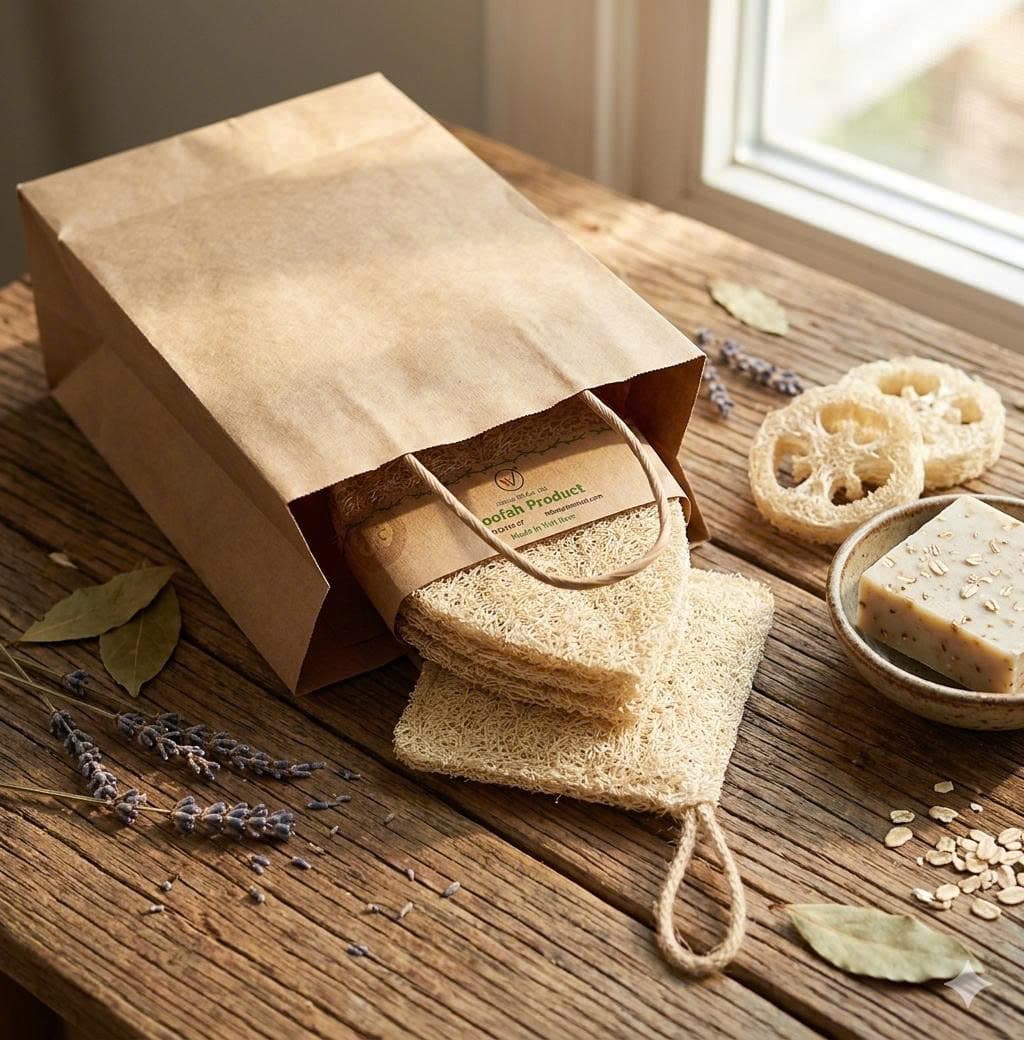
Natural Loofah vs Plastic Pouf: Which Is Better for Skin?
Natural Loofah vs Plastic Pouf: Which Is Better for Skin?
Most bathrooms have one of two products:
Or a plastic pouf.
Both are used with soap or body wash.
Both help create lather.
Both can support a cleaner bath routine.
But they are not the same.
A natural loofah is made from plant fibre.
A plastic pouf is usually made from synthetic mesh.
The difference matters for skin feel, exfoliation, sustainability, drying habits, and brand positioning.
So which one is better?
The honest answer is:
It depends on what you value most.
If you want soft foam and a low-cost bath accessory, a plastic pouf may feel familiar.
If you want natural exfoliation, plastic-free materials, and a more eco-conscious bath routine, natural loofah is the stronger choice.
This guide compares both options clearly.
What is a natural loofah?
A natural loofah comes from the dried fibre of the loofah plant.
When the plant matures, the inside develops a network of fibres.
After harvesting, drying, cleaning, and processing, that fibre becomes a sponge-like bath or cleaning product.
Natural loofah is commonly used as:
Bath glove.
Body scrubber.
Oval exfoliating pad.
Back scrubber.
Vegetable scrubber.
Its main appeal is simple:
It is plant-based.
It offers natural exfoliation.
It supports plastic-free bath and kitchen routines.
What is a plastic pouf?
A plastic pouf is usually made from synthetic mesh.
It is soft, light, cheap, and easy to find.
Plastic poufs are popular because they create a lot of foam with body wash.
They are usually gentle at first touch.
But they are not plant-based.
They are not biodegradable in the same way as natural fibre.
They are also part of a broader plastic-consumption problem in personal care products.
For consumers who want a lower-plastic bathroom, this becomes an issue.
Skin feel: which one feels better?
A plastic pouf usually feels softer.
It is designed mainly to create foam and spread body wash.
It gives light surface cleansing but very mild exfoliation.
A natural loofah has more texture.
It can feel firmer, especially when dry.
But when soaked in warm water, the fibre softens and becomes more comfortable.
For people who want gentle exfoliation, natural loofah offers more function.
For people with very sensitive skin, plastic pouf may feel softer, but it does not provide the same natural scrub effect.
The best choice depends on your skin type.
Exfoliation: natural loofah has the advantage
If the goal is exfoliation, natural loofah is usually better.
Its fibre texture helps remove dead skin cells from the surface of the skin.
This can make the skin feel smoother and cleaner.
Natural loofah works especially well for:
Arms.
Legs.
Elbows.
Knees.
Feet.
Back.
Shoulders.
However, pressure matters.
A loofah should be used gently.
It should be softened with water first.
It should not be used aggressively on sensitive or irritated skin.
A plastic pouf creates lather, but it does not exfoliate in the same way.
It is more of a foaming tool than a natural scrubber.
Lather: plastic pouf creates more foam
Plastic poufs are very good at creating foam.
Their mesh structure traps body wash and air, creating a rich lather quickly.
Natural loofah also creates lather, but usually with a more grounded, scrub-focused feel.
If your priority is maximum foam, plastic pouf may win.
If your priority is cleansing plus natural exfoliation, loofah is stronger.
Many users choose loofah because they want more than foam.
They want texture, skin renewal, and a more natural bath experience.
Sustainability: natural loofah is the better choice
This is where the difference becomes clear.
Natural loofah is plant-based.
It comes from a renewable agricultural source.
At the end of its lifecycle, it does not carry the same long-term plastic burden as synthetic bath accessories.
A plastic pouf is made from synthetic material.
It may be cheap and convenient, but it contributes to plastic waste.
For consumers trying to build a low-plastic bathroom, natural loofah is much better aligned with that goal.
For eco shops and sustainable retailers, this matters.
Natural loofah tells a cleaner story:
From plant fibre.
For daily care.
Back toward nature.
Hygiene: both need proper care
Some people think natural loofah is less hygienic than plastic pouf.
That is too simple.
Both products are used in wet environments.
Both can collect body wash, skin residue, and moisture.
Both need rinsing and drying.
The real hygiene factor is care.
After use, both natural loofah and plastic pouf should be:
Rinsed well.
Squeezed gently.
Hung to dry.
Kept out of standing water.
Replaced when they smell or weaken.
The difference is that natural loofah makes moisture control more visible.
Because it is plant-based, users must respect its drying needs.
That is not a weakness.
It is part of using a natural product correctly.
Drying: design matters
A good natural loofah should dry well when hung in airflow.
Its fibre structure is open and breathable.
But if it is left in a wet shower corner, it can stay damp.
A plastic pouf also stays wet if it is bunched up and left in a humid place.
Neither product should be stored in a closed container or wet corner.
For both options, a hanging loop or open-air storage is important.
For natural loofah, quick-dry design and proper processing before packaging can improve the user experience.
Durability: quality makes the difference
Plastic poufs can tear or loosen over time.
Natural loofah can weaken or break down as the fibre ages.
A high-quality natural loofah made from mature fibre usually performs better than thin, immature, poorly dried fibre.
This is why sourcing matters.
A good loofah should:
Soften when wet.
Keep fibre structure.
Rinse clean.
Dry properly.
Not fall apart too quickly.
Not smell strange.
Not contain visible mold spots.
For consumers, choose a loofah with firm natural fibre and clear care instructions.
For retailers, work with suppliers that check fibre strength, moisture, smell, and cleanliness.
Which is better for sensitive skin?
For very sensitive skin, neither product should be used aggressively.
A plastic pouf may feel softer, but it can still irritate if used too much.
A natural loofah can be suitable if used gently, soaked first, and applied with light pressure.
People with sensitive skin should:
Use loofah 1–2 times per week at first.
Avoid irritated or damaged skin.
Avoid the face unless using a product designed for facial use.
Use warm water to soften the fibre.
Stop if redness or discomfort appears.
Natural loofah is not about scrubbing harder.
It is about controlled exfoliation.
Which one is better for eco retailers?
For eco retailers, natural loofah is usually the better product story.
Plastic poufs are widely available and difficult to differentiate.
Natural loofah can be positioned as:
Plastic-free bath swap.
Natural exfoliating tool.
Plant-based self-care product.
Low-waste bathroom essential.
Eco gift item.
Retail-ready sustainable product.
It also pairs well with kraft packaging, cotton pouches, refill store displays, and zero-waste bath sections.
For stores that want to reduce plastic in the bathroom category, natural loofah is a logical replacement product.
Which one is better for Amazon sellers?
For Amazon sellers, the answer depends on the brand strategy.
Plastic poufs compete heavily on price.
They are easy to source but hard to differentiate.
Natural loofah gives more branding angles:
Plastic-free.
Natural fibre.
Home-spa.
Exfoliation.
Eco packaging.
Giftable bath set.
Sustainable lifestyle.
However, loofah requires better supplier control.
Sellers should pay attention to:
Fibre quality.
Moisture control.
Mold prevention.
Packaging.
Bundle count.
Product photos.
Care instructions.
Natural loofah can support a stronger brand story, but only if the product quality is consistent.
Natural loofah vs plastic pouf: quick comparison
Natural loofah is better for:
Natural exfoliation.
Plastic-free routines.
Eco-conscious consumers.
Retail sustainability story.
Bath and body care positioning.
Plant-based product lines.
Plastic pouf is better for:
Soft foam.
Low-cost mass market.
Users who only want lather.
Very light cleansing.
The key difference is purpose.
A plastic pouf is mostly a lather tool.
A natural loofah is a natural exfoliating and cleansing tool.
Final answer: which is better?
For skin exfoliation and eco-conscious bath routines, natural loofah is the better choice.
It gives more texture, supports plastic-free living, and offers a stronger natural product story.
For maximum foam and very soft contact, plastic pouf may feel easier for some users.
But for consumers who want to reduce plastic and build a more sustainable bathroom routine, natural loofah is a smarter long-term switch.
The best result comes from choosing a quality loofah, soaking it before use, using gentle pressure, rinsing it well, and hanging it to dry.
A natural loofah is not just an alternative to a plastic pouf.
It is a different way to think about daily body care.
Less plastic.
More natural fibre.
Better exfoliation.
A cleaner story from product to shelf.
Looking for plastic-free bath alternatives for your eco shop or Amazon product line? Explore our natural loofah bath range and retail-ready packaging options.