
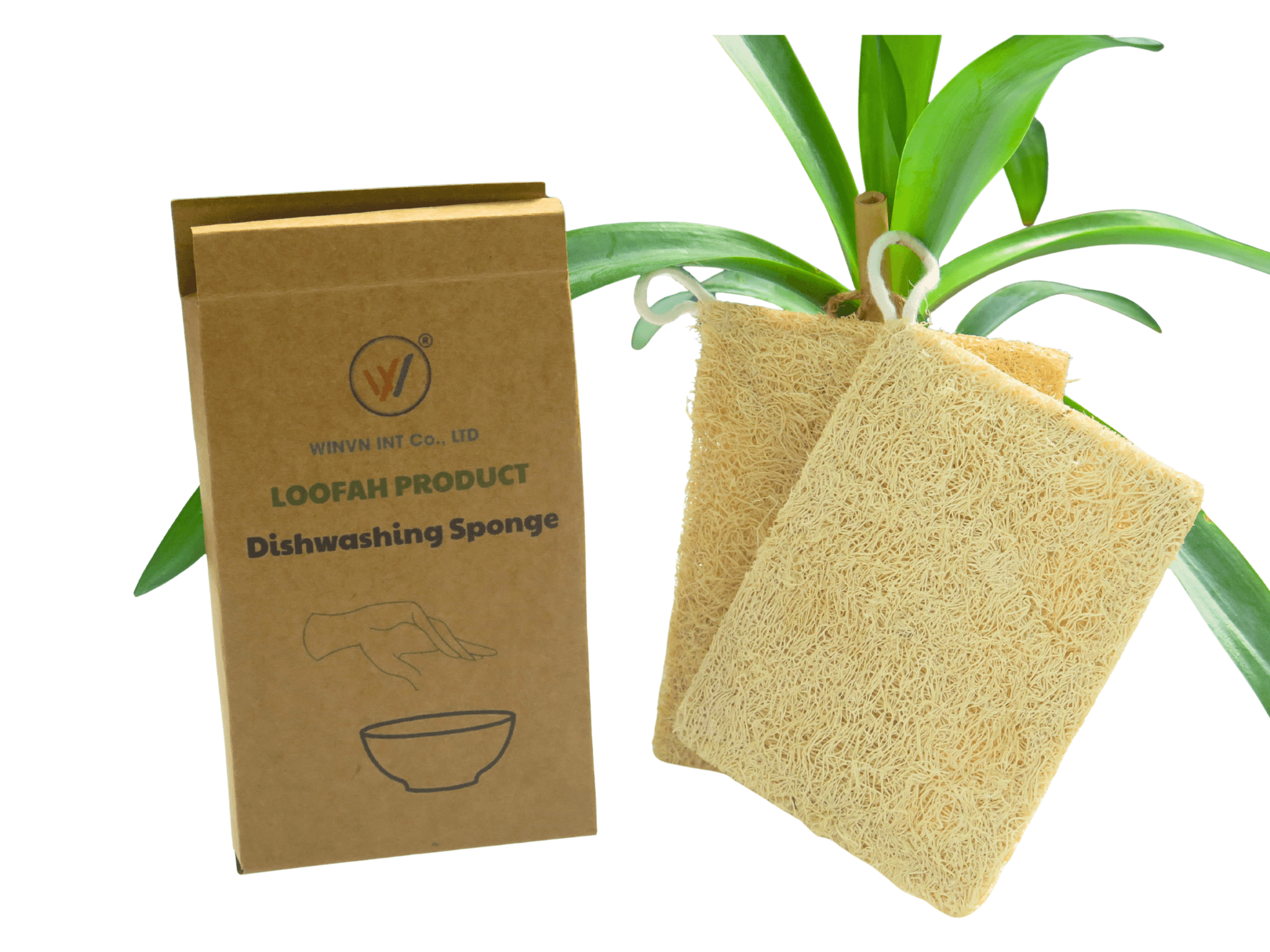
Is Loofah Biodegradable and Home-Compostable?
Is Loofah Biodegradable and Home-Compostable?
Yes, natural loofah is biodegradable.
And in many cases, it can be home-compostable.
But there is an important condition:
It must be real natural loofah, without synthetic backing, plastic parts, heavy coatings, or non-compostable accessories.
This is why buyers need to understand the difference between a simple natural loofah sponge and a finished loofah product with fabric, thread, elastic, label, packaging, or handle components.
Natural loofah fibre comes from a plant.
When it is clean, untreated, and free from synthetic additions, it can break down naturally over time.
That is one of the biggest reasons consumers choose loofah as a plastic-free bath or kitchen swap.
But not every product sold as “loofah” is equally compostable.
The material details matter.
What is natural loofah made from?
Natural loofah comes from the mature fruit of the loofah plant.
When the fruit matures and dries, the inner structure becomes a network of plant fibres.
This fibre is then cleaned, dried, cut, shaped, sewn, or packed into products such as:
Loofah gloves.
Oval scrubbers.
Vegetable scrubbers.
Cleaning pads.
The core fibre is plant-based.
This is what makes natural loofah different from plastic poufs and synthetic sponges.
A synthetic sponge may look simple, but it usually comes from petroleum-based materials.
A natural loofah comes from agricultural fibre.
Is loofah biodegradable?
Yes.
Natural loofah fibre is biodegradable because it is plant material.
Over time, microorganisms can break it down.
The speed depends on conditions such as moisture, airflow, temperature, and whether the loofah is cut into smaller pieces.
In a dry drawer, loofah will not break down quickly.
In a compost environment with the right moisture and microbes, it can decompose much more effectively.
That is the logic of biodegradability.
The material can return to nature under the right conditions.
Is loofah home-compostable?
Natural loofah fibre can usually be composted at home.
But again, check the full product.
A plain natural loofah piece is the easiest to compost.
A loofah product with cotton parts may still be compostable if the cotton is natural and untreated.
But a loofah product with polyester thread, elastic straps, plastic labels, glue, synthetic fabric, or coated packaging may not be fully home-compostable.
For home composting, separate what can break down from what cannot.
If the product has a string, label, sticker, or fabric backing, check the material first.
How to compost a used loofah
Composting a loofah is simple.
First, make sure the loofah is natural and free from synthetic parts.
Then rinse it well.
Remove soap, food residue, body wash, or oils.
Let it dry.
Cut it into smaller pieces.
Add it to your compost pile or compost bin.
Mix it with other brown materials such as dry leaves, cardboard, or paper.
Keep the compost balanced with green materials such as vegetable scraps.
The smaller the loofah pieces, the faster they can break down.
A whole loofah will take longer.
Cutting helps.
When should you not compost a loofah?
Do not compost a loofah if it contains non-compostable parts that cannot be removed.
Avoid composting if the product has:
Synthetic sponge layers.
Plastic mesh.
Elastic straps that are not natural.
Polyester fabric.
Metal parts.
Plastic handle.
Heavy glue.
Unknown chemical coating.
Painted or coated decorations.
Also be careful if the loofah was used with harsh chemicals.
For example, a loofah used for heavy-duty cleaning with chemical cleaners should not go into a home compost pile.
For bath or light kitchen use, a well-rinsed natural loofah is usually much more suitable.
Why loofah is a strong plastic-free swap
Loofah is popular because it replaces products that are commonly made from plastic.
In the bathroom, it can replace synthetic bath poufs.
In the kitchen, it can replace plastic dish sponges.
For eco-conscious consumers, this matters.
A product used every day should not create long-term plastic waste after a short life.
Loofah offers a better end-of-life story.
Use it.
Rinse it.
Dry it.
Replace it.
Compost the natural fibre when its useful life is over.
This is a simple circular product story.
From plant.
To product.
To daily use.
Back to soil.
Why packaging matters too
A compostable product packed in unnecessary plastic sends a mixed message.
If the product is natural, the packaging should support that story.
Eco retailers should look for packaging options such as:
Kraft paper band.
Kraft soft bag.
Kraft box.
Paper hang tag.
Cotton pouch.
Low-plastic retail packaging.
The goal is not only to sell a natural sponge.
The goal is to create a complete plastic-free or low-plastic product experience.
Packaging is part of the customer’s trust.
If customers buy a natural loofah and receive it in heavy plastic packaging, the product story becomes weaker.
Home-compostable vs biodegradable: what is the difference?
These two words are related, but not identical.
Biodegradable means a material can break down naturally over time.
Home-compostable means the material can break down in a home compost environment under normal composting conditions.
A product can be biodegradable but still break down slowly.
A product can be compostable only if the material and conditions are suitable.
For loofah, the natural fibre itself has a strong case.
But the full product must be reviewed carefully.
This is why specific language is better than vague claims.
Instead of saying only “eco-friendly,” a brand can say:
“Made from natural loofah fibre.”
“Plant-based sponge.”
“Plastic-free loofah fibre.”
“Cut into small pieces before composting.”
“Remove non-compostable accessories before composting.”
Clear claims build more trust than broad green language.
What eco shops should communicate to customers
Eco shops should not only display loofah as a product.
They should explain how to use and dispose of it.
Simple care and end-of-life instructions can increase customer confidence.
For example:
Rinse after use.
Hang to dry.
Replace when fibre weakens.
Remove any non-compostable parts.
Cut natural fibre into small pieces.
Add to compost with other brown materials.
This turns a simple product into an educational shelf item.
Customers like products that help them live their values more easily.
A loofah with clear composting guidance can become more than a sponge.
It becomes part of a zero-waste routine.
What Amazon sellers should consider
Amazon customers often scan images and bullet points quickly.
If compostability is part of your product promise, make it clear and responsible.
Do not overclaim.
Show the natural fibre.
Show the packaging.
Explain end-of-life steps.
Add care instructions.
Add a simple composting note.
Use images to show the difference between loofah and plastic sponge.
If your product has fabric backing or elastic straps, be transparent.
Customers appreciate clarity.
Eco claims should reduce doubt, not create confusion.
Why supplier transparency matters
A supplier should be able to explain the product materials.
For eco retailers and private-label buyers, ask:
Is the loofah fibre natural?
Is it chemically treated?
What fabric is used?
What thread is used?
What packaging is used?
Can the label be plastic-free?
Can the product be packed in kraft paper?
Can we add composting instructions?
Can we separate bath and kitchen lines by material?
A good supplier helps the buyer build a truthful eco claim.
That matters because consumers are becoming more careful about greenwashing.
Final answer
Natural loofah is biodegradable.
Plain natural loofah fibre can usually be home-composted when cleaned, dried, cut into smaller pieces, and added to a proper compost system.
But the full product matters.
If the loofah includes synthetic fabric, elastic, plastic handles, coated labels, or unknown materials, those parts may not be compostable.
The safest message is specific and honest:
The natural loofah fibre is plant-based and biodegradable.
Remove non-compostable parts before composting.
Cut the fibre into small pieces.
Compost under suitable home compost conditions.
For consumers, this makes loofah a practical plastic-free swap.
For eco shops, it creates a clear shelf story.
For Amazon sellers, it gives a stronger brand message than generic “eco-friendly” claims.
Natural loofah is not just a sponge.
It is a plant-based product with a better end-of-life story.
Looking for a home-compostable natural loofah line for your eco shop? Explore our plastic-free loofah options and retail-ready kraft packaging.