
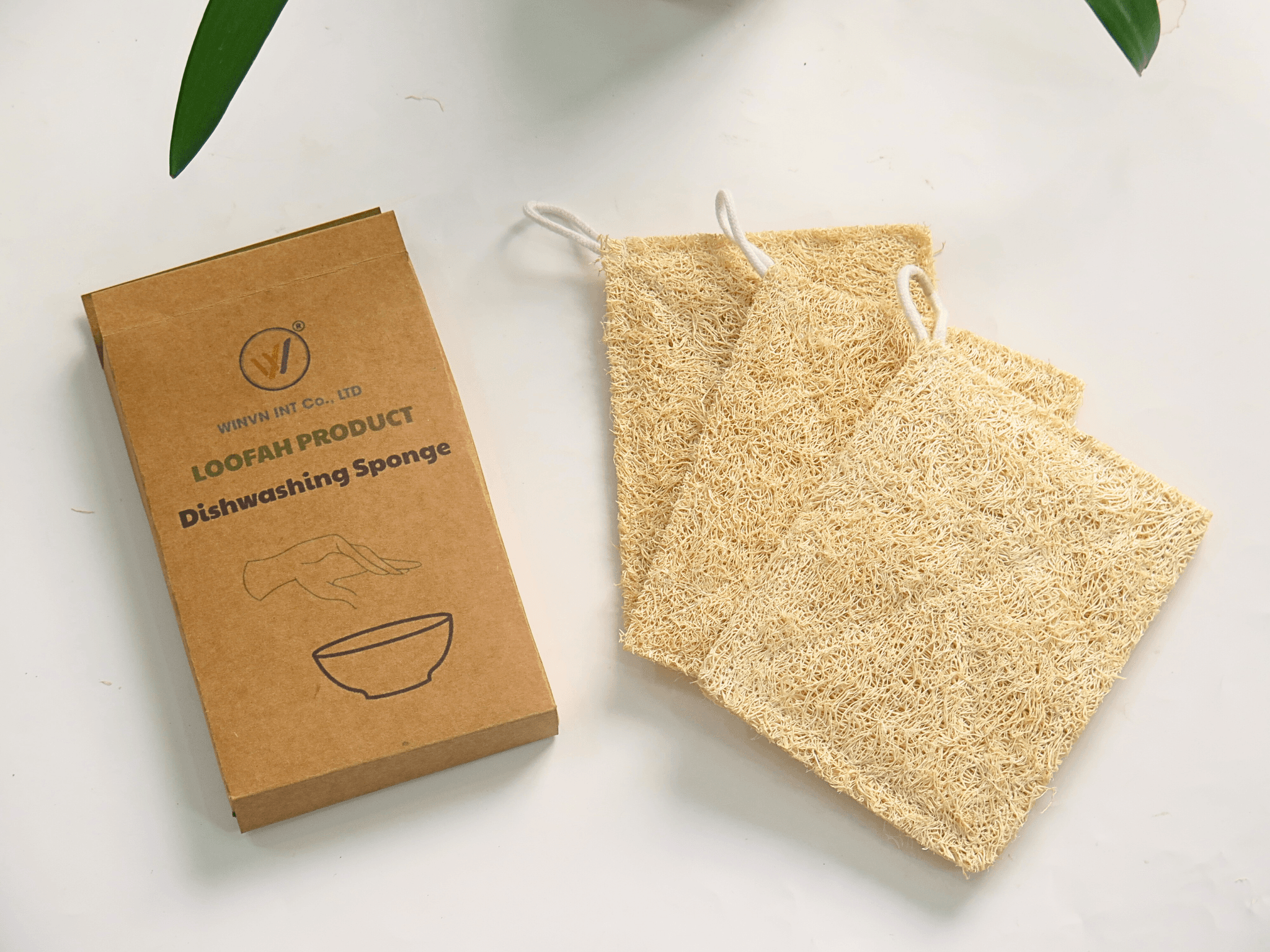
How to Clean and Disinfect a Natural Loofah
A natural loofah is a simple product.
But it needs the right care.
Because loofah is made from plant fibre, it can absorb water, soap, body residue, and moisture after each use.
If it is not cleaned and dried properly, it may develop odor, dark spots, or mold.
That does not mean natural loofah is unsafe.
It means natural loofah should be treated like a hygiene product.
You clean it.
You rinse it.
You dry it.
You replace it when needed.
This guide explains how to clean and disinfect a natural loofah properly, how often to do it, and how to reduce mold risk with better daily habits.
Why cleaning a loofah matters
A loofah is used in wet environments.
For bath use, it touches skin, soap, body wash, dead skin cells, and bathroom moisture.
For kitchen use, it touches grease, food residue, dish soap, and sink water.
The fibre structure helps with scrubbing and lathering.
But that same structure can also hold residue if the loofah is not rinsed well.
This is why cleaning is not optional.
It is part of normal loofah care.
A clean loofah should:
Smell neutral.
Dry properly.
Keep its fibre structure.
Have no dark mold spots.
Feel fresh after rinsing.
If the loofah smells musty even after cleaning, it should be replaced.
Step 1: Rinse the loofah after every use
The first rule is simple:
Do not leave soap or residue inside the loofah.
After each use, rinse it under clean running water.
For bath loofah, rinse out body wash, soap, and skin residue.
For kitchen loofah, rinse out food particles, grease, and dish soap.
Use your fingers to gently open the fibre and allow water to pass through.
Do not just rinse the outside.
The inside fibre must also be cleaned.
Step 2: Squeeze out excess water
After rinsing, squeeze the loofah gently.
Do not twist it too aggressively.
Strong twisting can damage the fibre or stitching, especially with loofah gloves, oval scrubbers, or back scrubbers.
The goal is to remove excess water without breaking the structure.
A loofah that stays dripping wet will take longer to dry.
Long drying time increases odor and mold risk.
Step 3: Hang it to dry
A loofah should not be left lying flat on a wet surface.
Do not leave it on the shower floor.
Do not leave it in a soap dish full of water.
Do not keep it pressed against a wet wall.
Hang it in a ventilated place.
Airflow is one of the most important factors in loofah hygiene.
A hanging loop is useful because it helps the loofah dry from more than one side.
If your bathroom is humid, move the loofah outside the shower area after use.
Step 4: Deep clean it regularly
Daily rinsing is important.
But deep cleaning can also help, especially if you use your loofah often.
A simple weekly cleaning routine is enough for many users.
Here are several gentle options.
Method 1: Warm water and mild soap
This is the easiest method.
Fill a clean bowl with warm water.
Add a small amount of mild soap.
Soak the loofah for a few minutes.
Gently press the fibre to release residue.
Rinse thoroughly with clean water.
Squeeze out excess water.
Hang to dry completely.
This method is suitable for regular maintenance.
It helps remove soap buildup and light residue without being too harsh on the natural fibre.
Method 2: Vinegar solution
Vinegar can help reduce odor and refresh the fibre.
Mix one part white vinegar with several parts water.
Soak the loofah for 5–10 minutes.
Do not soak it for too long.
Rinse very thoroughly.
Squeeze gently.
Hang in a ventilated area until fully dry.
This method is useful when the loofah starts to smell slightly damp.
But if the smell remains after cleaning, replace the loofah.
Method 3: Hot water rinse
A hot water rinse can help loosen residue.
Pour hot water through the loofah.
Press gently to move water through the fibre.
Rinse again with clean water.
Squeeze and hang dry.
Do not boil the loofah for a long time.
Excessive heat may weaken natural fibre or affect sewn parts, fabric backing, or binding.
Method 4: Sun drying
Occasional sun drying can help reduce moisture.
After rinsing, place the loofah in a clean, sunny, ventilated area.
Let it dry naturally.
Avoid leaving it under harsh direct sunlight for too long, especially if the product includes fabric, printed labels, or coloured parts.
Sun drying is not a replacement for rinsing.
It is an extra drying step.
Should you use bleach on a natural loofah?
For most users, bleach is not recommended.
Natural loofah is chosen because it is plant-based and low-chemical.
Using harsh chemicals may damage the fibre or leave unwanted residue.
If a loofah needs strong chemical treatment to feel clean, it is usually better to replace it.
A loofah should be easy to rinse, dry, and maintain.
If it becomes heavily stained, smelly, slimy, or moldy, cleaning may not be enough.
Replace it.
Can you wash a loofah in a washing machine?
It depends on the product.
Some simple loofah pieces may tolerate gentle washing.
But sewn bath gloves, scrubber pads, straps, or back scrubber belts may be affected by machine movement.
If you use a washing machine:
Use a gentle cycle.
Use mild detergent.
Place the loofah in a laundry bag.
Avoid high heat drying.
Air dry fully after washing.
However, hand cleaning is usually safer for natural loofah products.
It gives you more control and reduces unnecessary damage.
How often should you clean a loofah?
Rinse it after every use.
Deep clean it about once a week if used regularly.
Dry it fully every time.
Replace it when needed.
If you use your loofah daily, clean and inspect it more often.
If your bathroom is very humid, drying becomes more important.
If the loofah is used in the kitchen, rinse it especially well after greasy or food-heavy cleaning.
Signs your loofah should be replaced
Cleaning helps, but every natural loofah has a lifecycle.
Replace it if you notice:
Musty smell.
Dark spots.
Slimy texture.
Weak or broken fibre.
Loss of shape.
Persistent dampness.
Visible mold.
Unpleasant residue that does not rinse away.
Do not try to save a loofah that is already moldy.
For hygiene products, replacement is part of responsible use.
How to keep a loofah clean for longer
The best way to clean a loofah is to prevent heavy buildup in the first place.
Use these habits:
Rinse immediately after use.
Do not leave it wet in a closed space.
Hang it in airflow.
Keep it away from standing water.
Let it dry fully.
Deep clean weekly.
Replace it when condition declines.
For bath use, avoid sharing one loofah between multiple people.
For kitchen use, use separate sponges for dishes, vegetables, and heavy cleaning if needed.
Why supplier-side cleanliness matters
Consumers can clean a loofah after use.
But the product also needs to be clean before it reaches the customer.
For retailers, Amazon sellers, and importers, this is critical.
A quality loofah supplier should inspect:
Raw material dryness.
Mold or pest signs.
Natural colour.
Unusual smell.
Fibre strength.
Cleanliness after washing.
Dryness after drying.
Final product condition before packaging.
Good cleaning habits at home are important.
But good supplier-side quality control is the foundation.
A loofah should not arrive with odor, dampness, weak fibre, or dark spots.
Final answer: how do you clean a natural loofah?
Rinse it after every use.
Squeeze out excess water.
Hang it to dry in airflow.
Deep clean it weekly with warm water, mild soap, vinegar solution, or careful hot water rinsing.
Avoid harsh chemical treatment.
Replace it when it smells, darkens, weakens, or develops mold.
A natural loofah can be clean, practical, and long-lasting when moisture is controlled.
The real key is simple:
Clean it well.
Dry it fully.
Store it correctly.
Choose low-mold fibre by design.
Looking for natural loofah products made with better moisture control and mold-checking before export? Explore our quality process and low-mold fibre approach.