
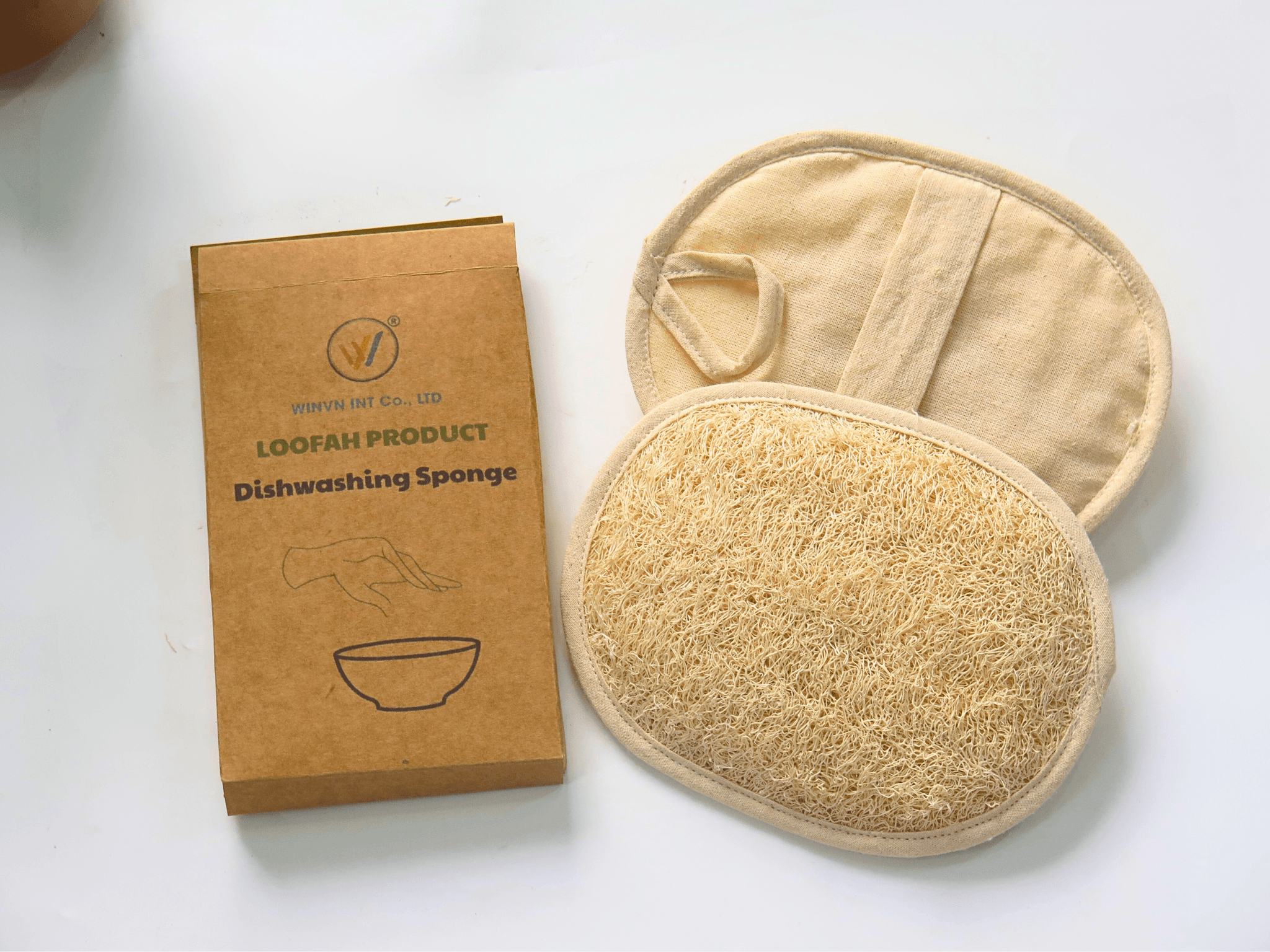
Are Loofahs Hygienic? What the Science Says
Are Loofahs Hygienic? What the Science Says
A loofah can be hygienic.
But only when it is used, dried, and replaced correctly.
This is the part many people misunderstand.
A natural loofah is not automatically dirty because it comes from a plant.
And a plastic sponge is not automatically cleaner because it is synthetic.
The real hygiene question is not only about the material.
It is about moisture, airflow, residue, and replacement habits.
A loofah is used in wet environments.
In the bathroom, it touches soap, body wash, dead skin cells, and skin oils.
In the kitchen, it touches food residue, grease, detergent, and sink water.
If any sponge or scrubber stays wet for too long, hygiene risk increases.
That applies to natural loofah, plastic poufs, synthetic sponges, and kitchen scrubbers.
So the better question is:
How do you keep a loofah hygienic?
Why loofahs can collect bacteria or mold
A loofah has an open fibre structure.
This structure is useful because it helps create foam, scrub gently, and rinse easily.
But after use, water and residue can stay inside the fibre.
If the loofah is left in a wet bathroom corner, on a flat sink, or inside closed packaging, it may stay damp.
Dampness creates the wrong condition.
Moisture plus organic residue plus poor airflow can lead to odor, dark spots, and mold.
This does not mean the loofah itself is the problem.
It means hygiene depends on care.
A natural product needs natural-product discipline.
Natural does not mean maintenance-free
Many eco-conscious consumers choose loofah because it is plant-based and plastic-free.
That is a good reason.
But natural products are not maintenance-free.
Wood, bamboo, cotton, and loofah all need proper drying.
If you leave a wooden brush soaking in water every day, it will not stay good forever.
If you leave a cotton towel wet in a corner, it will smell.
Loofah works the same way.
It performs best when it is rinsed, squeezed, hung, and dried after use.
The habit matters.
Is a loofah more hygienic than a plastic pouf?
Not automatically.
Both need care.
A plastic pouf can also trap moisture, soap, and skin residue.
A synthetic kitchen sponge can also develop odor if left wet.
The hygiene issue is not solved by plastic.
The difference is that a natural loofah gives a better plastic-free and biodegradable story, while still needing proper drying.
If you rinse and dry a loofah well, it can be a clean and practical bath or kitchen product.
If you leave it wet for days, it can become unhygienic.
The same principle applies to most wet-use cleaning tools.
How to use a loofah hygienically
The most important habit is rinsing.
After every use, rinse the loofah under clean running water.
For bath use, remove soap, body wash, and skin residue.
For kitchen use, remove food particles, grease, and detergent.
Do not only rinse the surface.
Let water move through the fibre.
Then squeeze gently.
Do not twist too aggressively, especially if the loofah is sewn into a bath glove, oval scrubber, or back scrubber.
After squeezing, hang it.
Airflow is the best daily protection.
A loofah should not sit in standing water.
It should not lie flat on a wet surface.
It should not stay inside a closed container while damp.
Where should you store a loofah?
The best place is somewhere dry, open, and ventilated.
A hook outside the wettest shower area is better than a shower corner that stays damp all day.
A rack near airflow is better than a soap dish with water.
For kitchen loofahs, avoid leaving them at the bottom of the sink.
After washing dishes, rinse, squeeze, and place the loofah where air can pass through it.
A hanging cord is useful.
It helps the sponge dry faster.
Fast drying is one of the simplest ways to keep a loofah hygienic.
How often should you replace a loofah?
Replace a loofah when it no longer looks, smells, or feels clean.
Do not wait until it becomes unpleasant.
Replace it if you notice:
A musty smell.
Dark spots.
Slimy texture.
Weak or broken fibre.
Loss of shape.
Persistent dampness.
Visible mold.
For daily bath use, replacement may be needed every few weeks.
For kitchen use, replacement may be faster, depending on grease and food contact.
The exact timing depends on usage.
A loofah used in a humid bathroom every day will not last as long as one used occasionally and dried well.
Can you disinfect a loofah?
Yes, but gently.
You can deep clean a loofah with warm water and mild soap.
You can also use a diluted vinegar solution for odor control.
After cleaning, rinse thoroughly and dry completely.
Avoid harsh chemical treatment for normal care.
Many people choose natural loofah because they want a low-chemical, plant-based product.
If a loofah needs strong chemical treatment to feel safe, it is better to replace it.
A loofah is not meant to last forever.
It is a natural hygiene product with a lifecycle.
Why supplier-side hygiene matters
Consumer care is important.
But product hygiene starts before the loofah reaches the customer.
For retailers, Amazon sellers, and importers, this is critical.
A supplier should inspect the raw material before production.
The fibre should be checked for:
Dryness.
Mold marks.
Dark spots.
Unusual smell.
Weak fibre.
Pest damage.
Dirt or residue.
After washing and drying, the loofah should be checked again.
The final product should be dry, clean, and stable before packaging.
If a loofah is packed too early while moisture remains inside the fibre, the buyer may receive a product with smell or mold risk.
This is why professional quality control is not just an internal factory step.
It protects the customer experience.
What should eco retailers look for?
Eco retailers should not only ask if the product is natural.
They should ask:
How is the loofah dried?
How is mold risk checked?
Is the product inspected before shipment?
Does the product have care instructions?
Does the packaging allow a clean retail presentation?
Is the fibre strong enough for repeated use?
Does the product smell clean?
Does it dry properly after water contact?
For a retail product, hygiene is part of trust.
A loofah may be eco-friendly, but if customers experience odor or mold, the brand loses credibility.
What should Amazon sellers look for?
Amazon sellers should be even more careful.
A hygiene complaint can become a negative review.
A negative review can reduce conversion.
A weak listing can lose ranking.
For FBA sellers, product quality must be consistent before inventory goes into Amazon’s warehouse.
The seller cannot inspect every unit after arrival.
That is why supplier-side inspection matters.
A good loofah supplier should provide a clear process for checking moisture, mold, smell, fibre strength, and packaging condition before shipment.
The goal is not only to ship products.
The goal is to protect reviews.
Are loofahs hygienic for daily use?
They can be.
But daily use requires daily care.
For bath use:
Wet the loofah first.
Use gentle pressure.
Rinse after use.
Squeeze out water.
Hang dry.
Replace when needed.
For kitchen use:
Rinse out food residue.
Avoid leaving it in the sink.
Dry between uses.
Replace when it weakens or smells.
Do not use one loofah for too many purposes.
Keep bath and kitchen loofahs separate.
Final answer
Loofahs are hygienic when they are properly used, cleaned, dried, and replaced.
They become unhygienic when they stay wet, collect residue, or are used beyond their lifecycle.
The material is only one part of the story.
The real hygiene factors are moisture control, airflow, cleaning habits, and quality inspection before shipment.
A natural loofah can be a clean, plastic-free, practical product.
But it must be treated like a natural fibre product.
Rinse it.
Dry it.
Store it well.
Replace it on time.
And for retailers or Amazon sellers, choose suppliers who inspect the fibre before shipment.
Looking for natural loofah products inspected for dryness, fibre quality, and mold risk before export? Explore our quality process and export-ready loofah range.